WELCOME TO TRADITION GOLF CLUB
Arnold Palmer's Desert Legacy.
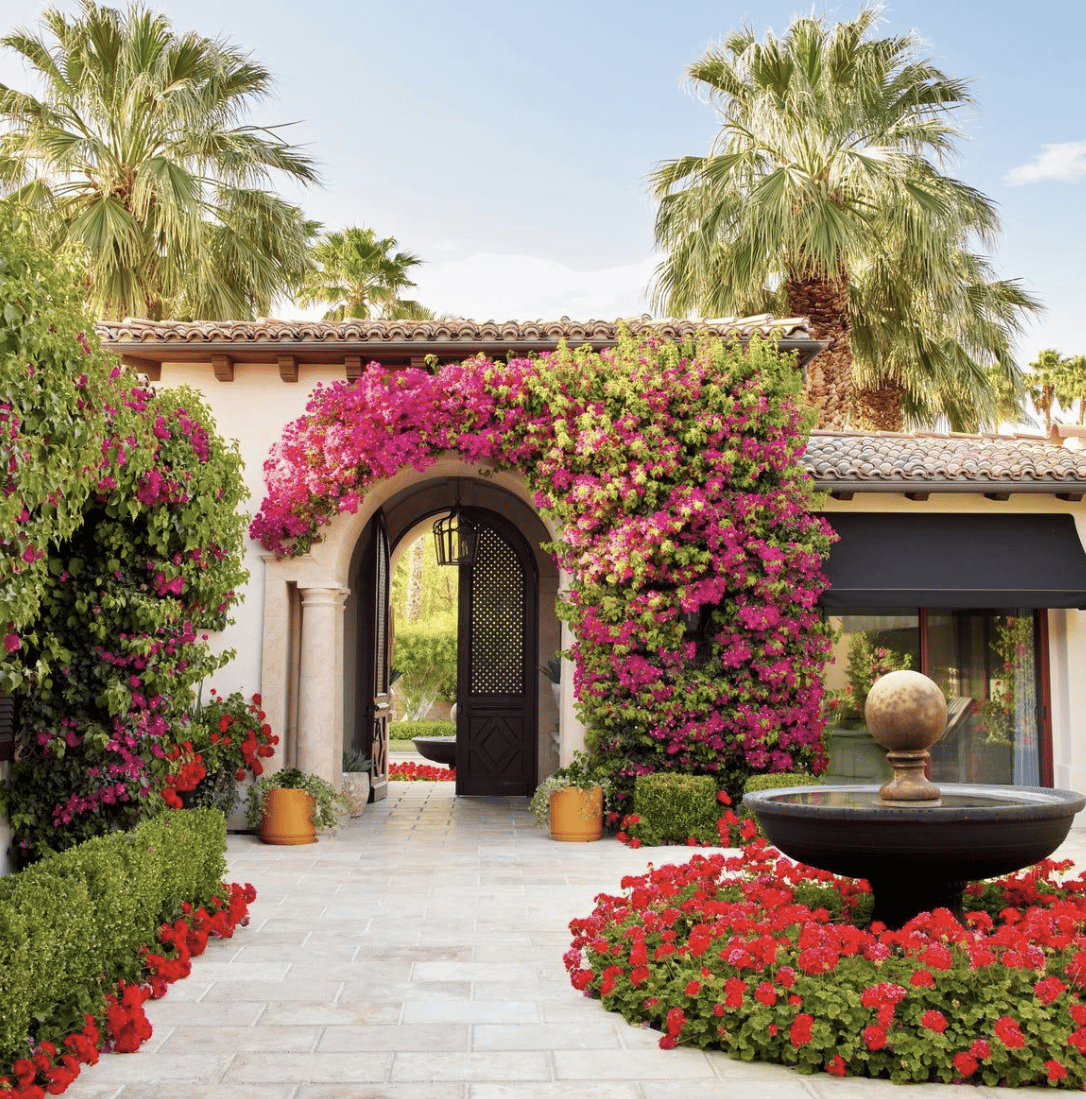
Tradition Golf Club occupies a secluded mountain cove in La Quinta, on land whose history reaches back to a 1902 desert homestead. Arnold Palmer chose this setting for his championship golf course and made Tradition his own desert retreat. Today, the member-owned club retains historic ranch buildings alongside custom estates, cottages, and distinctive mountain homesites.
For buyers, Tradition offers an unusual range of settings within one community. Elevated homes along Del Gato Drive can overlook the valley, while properties near Coyote Canyon sit close to the rugged Santa Rosa Mountains. Other residences combine fairway views with convenient access to the clubhouse.
Those differences matter when evaluating homes for sale at Tradition. Elevation, privacy, architecture, and location within the community can be just as consequential as square footage or construction year.
Tradition's history makes the address distinctive. The individual homesite determines much of the ownership experience.
THE COMMUNITY AT A GLANCE
Understanding Tradition Golf Club.
Location
78-505 Avenue 52, La Quinta, California
Historic Origins
John Marshall homestead, established in 1902
Golf Development
Sienna Corporation and Arnold Palmer
Course Opening
1997–1998
Golf
18-hole championship course and nine-hole par-three course, designed by Arnold Palmer and Ed Seay
Club Structure
Member-owned equity club since 2008
Residences
Custom estates, cottages, and individual homesites
Homesite Sizes
Approximately one-quarter acre to one acre in the original community research
Architecture
Spanish Colonial, Early California, Mediterranean, and select contemporary residences
Membership
Golf, Club, and Junior categories; real estate ownership not required
Community information reflects the original property research and official club materials. Verify individual homesite specifications, membership terms, and current availability.
THE HISTORY OF TRADITION
A Property With a Past Worth Preserving.
Long before Tradition became a golf club, its land was part of John Marshall's desert homestead.
Marshall settled the property in 1902. The original ranch buildings eventually formed part of Hacienda del Gato, a retreat that welcomed prominent visitors during the desert's early development.
The original cottage dates to the early homestead, while the principal Hacienda building was constructed later. The property became associated with guests including Clark Gable, Katharine Hepburn, Dwight D. Eisenhower, and John F. Kennedy.
When Sienna Corporation acquired the land in 1996, it partnered with Arnold Palmer to create Tradition. The course and clubhouse opened in 1997–1998, with Palmer closely involved in the vision for the property.
Tradition became Palmer's desert home. His cottage and the club's historic structures remain reminders that this was a personal place to him, not merely another course bearing his name.
The club's history is part of its character today, from the architecture and preserved buildings to the way the golf course follows the surrounding terrain.
For prospective owners, that legacy provides context. The real estate decision still requires a careful look at the individual home, membership, and ownership costs.
THE GOLF EXPERIENCE
The Course Arnold Palmer Chose to Call Home.
Tradition's championship course reflects Palmer's preference for a playable layout that works with the natural movement of the land.
The course features broad fairways, water hazards, white sand bunkers, and significant changes in elevation. The front nine plays through a more landscaped setting, while portions of the back nine move closer to the rocky mountain terrain.
The par-four seventeenth is a particularly striking example, with an elevated tee and a drop of more than 200 feet toward the fairway.
Tradition also offers a separate nine-hole par-three course, along with practice facilities, instruction, tournaments, and a caddie program.
The club experience extends beyond golf through dining, fitness, spa, pickleball, bocce, and social activities.
For buyers, the relevant question is how those offerings fit their plans. Someone intending to play frequently may value convenient access to the course and practice areas. Another household may be more interested in dining, recreation, and the social environment.
MEMBERSHIP & CLUB OWNERSHIP
How Does Membership at Tradition Work?
Tradition is a member-owned equity club. It transitioned from developer ownership in 2008, and its membership structure is separate from residential property ownership.
This distinction matters. You can pursue membership without buying a home at Tradition, and purchasing a home does not automatically make you a member.
Membership is by invitation and subject to the club's approval and availability requirements.
Golf Membership
Tradition describes its Golf Membership as providing access to the championship course, nine-hole short course, practice facilities, clubhouse, fitness and spa facilities, dining, and recreational programming.
This category is relevant to buyers who intend to make golf a central part of their time at the club.
Club Membership
The Club Membership offers a different range of privileges, including the nine-hole short course, clubhouse, fitness and spa facilities, bocce, pickleball, dining, and social activities.
Prospective members should confirm the full privileges and any limitations before selecting a category.
Junior Membership
Tradition also advertises a Junior Membership for eligible younger applicants. The club's published descriptions have shown differing age references, so applicants should confirm the current eligibility threshold directly.
The category includes golf and other club privileges as specified by the membership office.
What Are Tradition's Membership Fees?
Current initiation fees, dues, equity provisions, capital assessments, and membership availability should be requested directly from Tradition Golf Club.
We have not included an unverified fee figure. Buyers should request the written membership schedule and understand any refundability, resignation, transfer, or approval provisions before making a purchase decision that depends on club access.
REAL ESTATE INSIDE THE GATES
Three Distinct Ways to Experience Tradition.
Tradition's mountain cove creates noticeably different residential settings. Understanding those differences is a useful first step before comparing available homes.
Custom estates and cottages vary in architecture, scale, and condition, but their relationship to the landscape often influences how a property lives more than a floor plan alone.
Upper Del Gato Drive — Elevated Valley Views
Along the elevated portions of Del Gato Drive, certain homes overlook the community and extend their views toward the wider Coachella Valley.
These sites may offer greater separation from the immediate golf-course setting, with mountains framing the view in multiple directions.
The trade-offs are practical. Buyers should evaluate driveway slope, accessibility, outdoor usability, neighboring rooflines, and the relationship between the residence and its elevated terrain.
A higher position may provide a broader view, but it does not automatically make the property more suitable for every buyer.
Talking Rock & Coyote Canyon — Against the Mountain
Properties near Talking Rock and Coyote Canyon offer a different relationship with the Santa Rosa Mountains.
Here, natural rock, desert vegetation, and the surrounding mountain walls can form an immediate part of the residential setting.
These homes may appeal to buyers who prefer a more enclosed environment rather than an expansive valley panorama.
The specific location warrants careful review of privacy, drainage, usable outdoor space, landscape maintenance, and any additional property-specific conditions.
Deacon Drive & Claret Cove — Golf and Club Convenience
Homes around Deacon Drive and Claret Cove can offer more traditional golf and mountain views, often with easier access to club facilities.
For owners who play golf or visit the clubhouse frequently, a short walk or cart ride may be more useful than a highly elevated position elsewhere.
Others may prefer greater separation from nearby fairways and club activity.
As with the rest of Tradition, the individual home's orientation, outdoor spaces, and privacy deserve close attention.
At Tradition, a mountain view can mean looking over the valley, living close to natural rock, or looking across a green fairway toward the mountains. Those are three different experiences.
THE McLENNAN PERSPECTIVE
What Should Buyers Verify Before Purchasing?
Buying at Tradition involves evaluating the residence, the land, and the ownership obligations together.
A listing may describe the view or architectural style. Buyers should go further and establish how the property will function over time.
Homesite & Orientation
Study elevation, sun exposure, privacy, golf activity, and the views from rooms and outdoor areas used most often. Visit at different times of day when possible.
Construction & Condition
Review permits, renovations, major systems, maintenance history, and any structural or site-specific concerns identified through appropriate inspections.
HOA Documents & Expenses
Obtain current budgets, assessments, governing documents, insurance information, and maintenance responsibilities. Review whether any known capital projects could affect costs.
Membership Obligations
Confirm eligibility, approval timing, dues, initiation payments, capital obligations, and whether the preferred category is available. Do not assume membership transfers with the home.
Vacant Homesites
If purchasing land, review permitted building envelopes, setbacks, architectural guidelines, utilities, grading, access, and likely construction costs before committing to a design.
Ongoing Property Care
Consider landscape maintenance, pools, specialized systems, property management, and any additional requirements associated with hillside construction or seasonal ownership.
A thoughtful purchase is not simply about finding the most attractive Tradition property. It is about understanding the full responsibilities and advantages of owning that particular home.
TRADITION GOLF CLUB REAL ESTATE
What Do Tradition Golf Club Homes Cost?
Tradition is a relatively small market, and its custom residences can differ substantially in size, architecture, condition, and homesite character.
In the six months ending July 31, 2026, four homes sold between $4,500,000 and $7,675,000, with a median closed price of $5,825,000.
Those results offer useful historical context, but four transactions are not enough to establish what every Tradition home is worth.
Historical MLS Snapshot — July 31, 2026
Closed sales, prior six months | 4 |
|---|---|
Closed price range | $4,500,000–$7,675,000 |
Median closed price | $5,825,000 |
Median closed price per sq. ft. | $947 |
Median days on market | 103 |
Median sale-to-list ratio | 96% |
Active listings on July 31 | 4 |
Active asking range | $3,995,000–$6,500,000 |
Median active asking price | $5,185,000 |
Pending sales | 1 |
Source: GPS MLS and CRMLS, Tradition Golf Club subdivision, La Quinta Area 313. Closed sales January 31–July 31, 2026; retrieved July 31, 2026. Historical figures from the supplied market analysis, not independently refreshed. Information deemed reliable but not guaranteed.
Why One Sale Stands Out
Three of the four closed sales achieved prices between approximately $936 and $949 per square foot.
The fourth achieved approximately $1,383 per square foot—roughly 46% above the next highest result.
That transaction involved a newly built residence in an elevated position on upper Del Gato Drive.
It is an interesting result, but it would be misleading to attribute the entire price difference to elevation. New construction, architecture, condition, views, and property-specific circumstances may all have contributed.
For comparison, a residence exceeding 7,000 square feet on Talking Rock Turn sold at approximately $949 per square foot.
These transactions demonstrate why a simple price-per-square-foot calculation can overlook meaningful differences between Tradition properties.
The important question is not which home achieved the highest figure. It is what made those properties different—and which differences matter to the home being evaluated.
FOR TRADITION HOMEOWNERS
What Makes One Tradition Home Worth More Than Another?
The small number of annual transactions at Tradition makes individual comparable sales especially important.
A newly built residence high on Del Gato Drive may appeal to a different buyer than a larger, older property against the mountain edge.
Both may be exceptional homes, but applying the same valuation approach to them can produce a misleading result.
Choose Meaningful Comparables
Consider location within the cove, elevation, architecture, building area, condition, renovations, privacy, and outdoor living rather than relying only on the latest sales.
Show What the Homesite Offers
Photography and property presentation should communicate the actual relationship between the house, mountains, golf course, and outdoor areas.
Evaluate Improvements Before Listing
Review whether repairs, maintenance, or targeted renovations will improve buyer confidence and presentation enough to justify their cost and timing.
Understand Current Alternatives
Because Tradition may have few comparable listings at one time, buyers can also consider other La Quinta private clubs. Positioning should account for those alternatives without ignoring what makes Tradition distinct.
Identify the Likely Buyer
A buyer seeking a dramatic hillside retreat may value different characteristics than someone prioritizing easy club access, an established floor plan, or a manageable seasonal home.
Price With Current Evidence
Historical sales establish context. The asking strategy should also reflect the property's current condition, active competition, and how qualified purchasers are evaluating the market.
An effective Tradition selling strategy should explain why the individual home is worth its asking price—not rely on the prestige of the address to make the argument.
What Is Your Tradition Home Worth?
Laurie McLennan can help evaluate your home's setting, architecture, improvements, recent comparable sales, and current market competition before you establish an asking price.
A property-specific review can also help determine which preparations, if any, are worth making before listing.
Request a private Tradition market assessment through the contact section below.
PROPERTY USE & RENTAL RULES
Are Short-Term Rentals Allowed at Tradition?
Buyers should not assume that a Tradition residence can be used as a short-term vacation rental.
La Quinta restricts most new short-term vacation rental permits outside specified exempt areas and application categories.
The city provides a homeshare permit process that requires owner occupancy during guest stays. It also allows qualifying parcels of at least 25,000 square feet to apply for a large-lot exemption, subject to additional criteria and city approval.
That acreage threshold is relevant because some larger Tradition homesites may exceed it. But meeting the minimum lot area does not guarantee an exemption or permit.
Tradition's association documents may also impose restrictions beyond those established by the city.
Anyone considering rental income should verify the specific address, applicable city rules, permit status, and association restrictions in writing before making a purchase decision.
COMPARING LA QUINTA PRIVATE CLUBS
Tradition, The Madison Club or The Hideaway?
These three La Quinta communities offer different combinations of golf, architecture, residential settings, and club services.
Tradition Golf Club
Arnold Palmer-designed golf, preserved ranch history, varied mountain homesites, and a member-owned equity structure.
Membership is not dependent on purchasing a residence, subject to club approval and availability.
The Madison Club
A Tom Fazio championship course, custom estates, villas, clubhouse suites, and a distinctive hospitality offering.
Its residential categories and individualized homesites require different ownership comparisons.
The Hideaway
Two championship courses designed by Pete Dye and Clive Clark, custom residences, and extensive club facilities.
The Hideaway is also member-owned, although its residential setting, golf offering, and membership arrangements differ from Tradition.
Which Community Should You Choose?
Tradition may especially interest buyers drawn to Arnold Palmer's legacy, its historical setting, and the mountain cove.
Madison offers different custom residential options and an emphasis on private-club hospitality, while The Hideaway provides two distinct championship golf courses.
The most useful comparison starts with the actual homes available, membership eligibility, ownership costs, and the activities that matter to the buyer.
TRADITION GOLF CLUB REAL ESTATE QUESTIONS
Frequently Asked Questions.
Where is Tradition Golf Club?
Tradition Golf Club is located at 78-505 Avenue 52 in La Quinta, California, within a mountain cove at the base of the Santa Rosa Mountains.
Who designed Tradition Golf Club?
Arnold Palmer designed Tradition's championship course with longtime design partner Ed Seay. The community also offers a separate nine-hole par-three course.
Did Arnold Palmer live at Tradition?
Yes. Tradition was Arnold Palmer's desert home, and the club preserves elements of his personal connection to the property.
What is Hacienda del Gato?
Hacienda del Gato is the historic ranch property within Tradition. Its origins reach back to John Marshall's 1902 homestead, with the main Hacienda building added later. It became a retreat for notable visitors before the golf community was developed.
Is Tradition Golf Club member-owned?
Yes. Tradition formally transitioned from developer ownership to a member-owned equity club in 2008.
Do you have to own a home at Tradition to join the club?
No. Real estate ownership is not required for membership. Applicants must meet the club's invitation, availability, and approval requirements.
What membership options does Tradition offer?
The club advertises Golf, Club, and Junior membership categories. Golf privileges, recreational access, eligibility, and other terms vary by category and should be confirmed with the club.
How much does Tradition membership cost?
Current initiation payments, dues, equity arrangements, and assessments should be obtained directly from Tradition Golf Club. No verified current membership fee schedule is published in this guide.
What do homes cost at Tradition Golf Club?
During the six months ending July 31, 2026, four reported homes sold between $4.5 million and $7.675 million, with a median price of $5.825 million. These are historical figures, not current listing prices or an individual valuation.
What types of homes are at Tradition?
Tradition includes custom estates, cottages, and individual homesites. Its architecture reflects Spanish Colonial, Early California, Mediterranean, and some contemporary influences.
Which Tradition homesites have the best views?
That depends on what the buyer values. Upper Del Gato offers elevated valley perspectives, Talking Rock and Coyote Canyon provide closer mountain settings, and other positions combine golf and mountain views with clubhouse convenience.
Can you build a custom home at Tradition?
Tradition has offered vacant homesites. Before purchasing, confirm current inventory, architectural rules, building envelopes, setbacks, grading requirements, utilities, and construction feasibility.
Are short-term rentals allowed at Tradition?
Eligibility must be confirmed for the specific property. La Quinta restricts most new short-term vacation rental permits, with specified exceptions. Tradition's governing documents may impose additional limitations.
How does Tradition compare with The Madison Club?
Tradition combines Arnold Palmer golf, historic ranch buildings, and member-owned club governance. Madison offers Tom Fazio golf, custom estates, villas, and a different club hospitality environment. Compare available properties and actual membership arrangements.
What is my Tradition home worth?
Value depends on elevation, homesite position, architecture, condition, renovations, privacy, views, comparable sales, and current competition. A property-specific assessment is more meaningful than applying a community-wide median.
THE McLENNAN TEAM
Tradition Golf Club, Understood.
Laurie McLennan brings more than 25 years of Greater Palm Springs real estate experience to helping buyers and sellers navigate the desert's private residential communities.
Together, Laurie and Cailin combine local real estate knowledge with complementary expertise in marketing, presentation, and client service.
For buyers considering Tradition, that means understanding the individual home's setting, membership arrangements, and ownership responsibilities before making a decision.
For sellers, it means selecting meaningful comparable sales, identifying the property's strongest characteristics, and developing a pricing and presentation strategy supported by current market evidence.
Tradition's history makes it distinctive. Each home still deserves to be evaluated on its own merits.
Whether you're considering a purchase or preparing to sell, informed real estate advice begins with understanding the property itself.
The McLennan Team | Desert Sotheby's International Realty
Laurie McLennan, California DRE #01424382
Community information reviewed October 2026. Historical MLS figures reflect the six months ending July 31, 2026 and have not been independently refreshed. Club membership, fees, inventory, association requirements, and rental regulations may change. Confirm relevant information directly with the club, association, and appropriate public authorities. Information is deemed reliable but not guaranteed and is not legal, financial, or tax advice.